
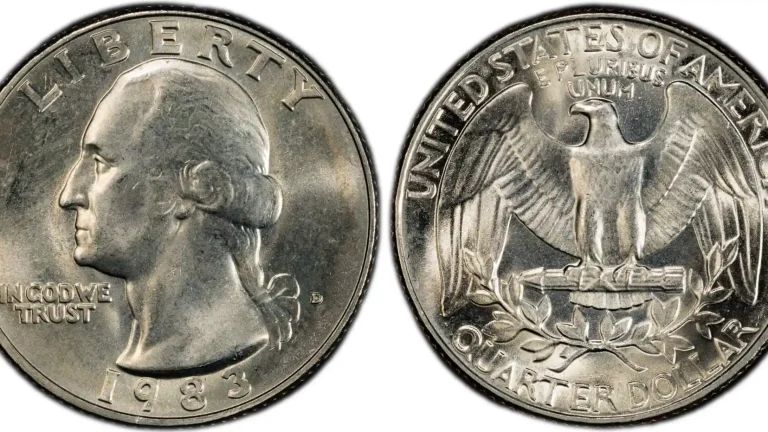
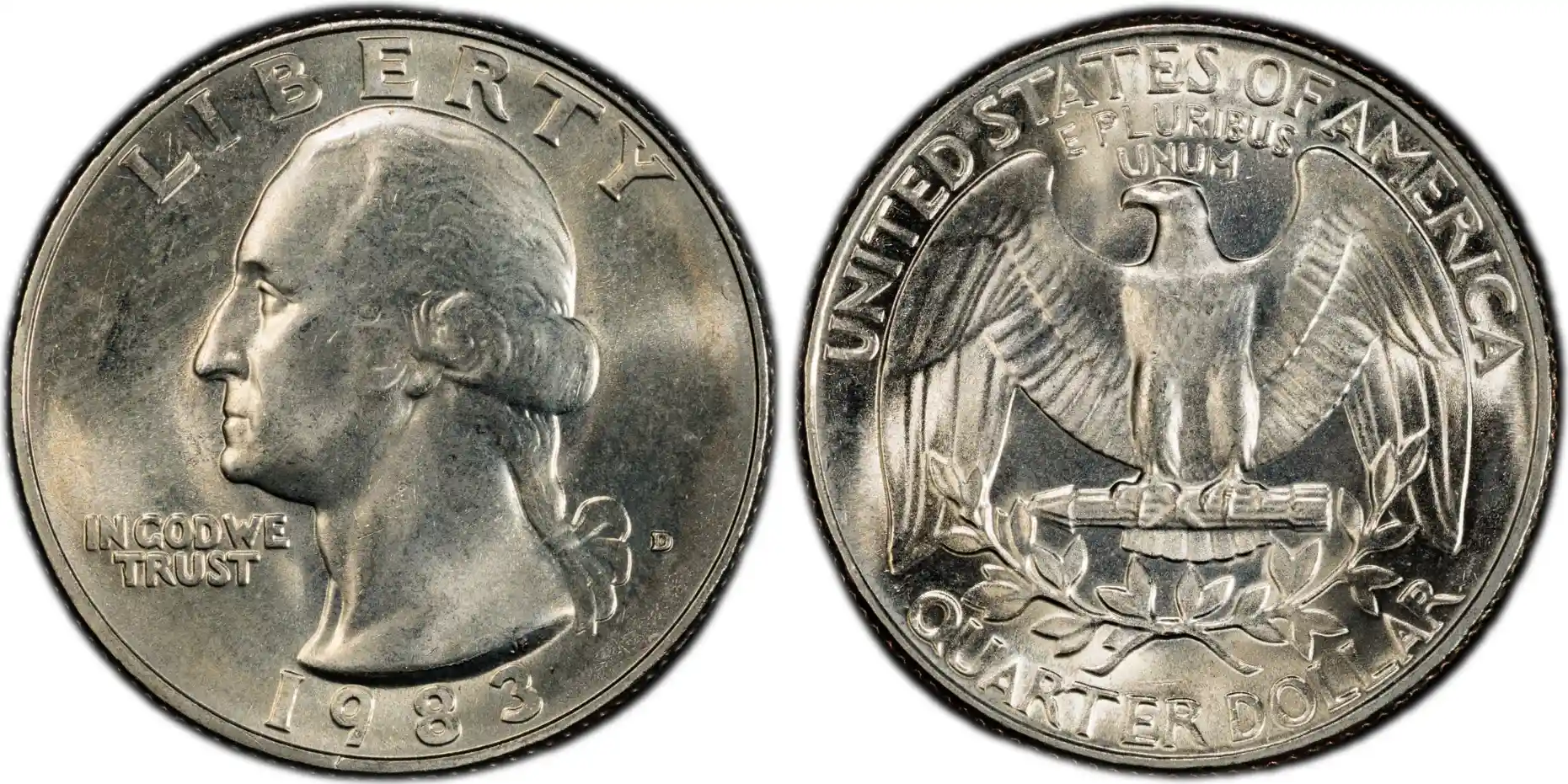
Regular clad metal coins with 25 cents face value from 1983 usually cost from $0.25 to $1 in circulated condition. High grade specimens without wear signs easily reach prices between $30 and $1000.
Auction record 1983 quarter value for the finest known specimen stands at $1586. Finding a high grade 1983 quarter is harder than many collectors expect and that is reflected in the market prices.
| Parameter | Value |
| Face value | $0.25 |
| Production date | 1983 |
| Metal composition | Standard clad metal |
| Coin mass | 5.67 grams |
| Coin width | 24.3 millimeters |
| Edge style | Reeded |
Coin metal parts:
- Outer layer
- Core metal
1983 P Philadelphia Mint Quarter Value
Philadelphia Mint produced coins with the P mint mark. Total mint output reached 673535000 pieces. Worn pocket change coins hold no premium value. Average good condition specimens sell for $0.50 to $3. Real profit comes only from MS65 grade specimens and higher. Typical MS65 coins trade around $35 today.
MS66 graded quarters cost between $80 and $150 on the market. Superb MS67 pieces show a massive price spike.
MS67 specimen buyers pay from $650 to $850. Record price for a 1983 P quarter in MS67 plus condition reached $1586 during a 2019 auction.
1983 D Denver Mint Quarter Value
Denver Mint marked its coins with the D letter. Total production output reached 617806446 pieces. Circulated piece prices range from $0.25 to $2. Denver strike quality was often lower than Philadelphia Mint standards. Clean surfaces are very rare for this mint mark.
Average MS65 specimen prices have a market value between $20 and $35.
Slightly better MS66 specimens sell for $45 to $85. Premium MS67 graded quarters command prices between $250 and $450. Auction record price for a 1983 D quarter in MS67 condition stands at $1410.
Serious investors pay top dollar for clean Denver strike premiums. Many search through old bank rolls to find clean examples. Original paper wrappers sometimes hold hidden gems. Finding them requires patience and luck.
1983 S San Francisco Mint Proof Quarter Value
San Francisco Mint created special collector proof coins. These proof pieces carry the S mint mark. Total proof run reached 3279126 pieces. Workers used polished blanks and special dies. Dealers sell these coins in protective plastic holders today. Standard PR69 deep cameo specimens cost between $5 and $8.
Perfect PR70 deep cameo pieces have a value from $30 to $50. Perfect PR70 deep cameo record price stands at $235.
Proof coin demand remains stable but slow. Mass produced proof coin values remain flat. Proof pieces stay in original packaging to prevent damage.
| Coin Grade | 1983 P Price | 1983 D Price | 1983 S Price |
| MS60 | $5 | $4 | No circulation |
| MS63 | $12 | $10 | No circulation |
| MS65 | $35 | $25 | No circulation |
| MS66 | $110 | $65 | No circulation |
| MS67 | $850 | $350 | No circulation |
| PR68 | No circulation | No circulation | $4 |
| PR69 | No circulation | No circulation | $7 |
| PR70 | No circulation | No circulation | $45 |
Grade grouping:
- Mint state
- Proof state
How To Determine Coin Grade Yourself
Accurate condition assessment determines the final sales price. Professional coin dealers use the Sheldon scale. Here are the main key grade features. Grading numbers range from 1 to 70. Higher numbers indicate better physical condition. Standard market dealers only pay top prices for MS65 to MS67 coins.
EF40 Condition
Most design details remain sharp and clear. Light wear marks cover high portrait spots. Original mint luster remains in protected areas. Coin fields show minor circulation marks.
AU55 Condition
Very light wear exists on Washington cheek. Almost full mint luster covers both sides. Excellent eye appeal makes these pieces attractive. Only minimal friction marks show on design high points.
MS60 Condition
Surface marks are very common on these pieces. Many scratches exist from contact with other coins. Original mint luster is completely gone. Washington portrait shows heavy friction.
MS63 Condition
Moderate luster remains on most coin areas. Small scratches exist on the central field. Design details are clear under normal light. Hair lines are visible.
MS65 Condition
Strong mint luster covers the entire surface. Only minor marks exist on unimportant areas. Eagle feathers are fully detailed. Eye appeal is strong.
MS67 Condition
Excellent visual quality defines this grade. No visible flaws exist without coin-identifier.com. Only tiny marks show under magnification. Luster is intense.
Necessary grading tools:
- Five times magnifier
- Strong LED light
- Soft cotton gloves
Famous Mint Error Types
Mint production mistakes increase coin value. Collectors pay premium prices for verified errors. Each error type has unique visual features.
Double Die Error
Improper die creation causes doubled design elements. Doubling is most visible on the front letters. Average condition errors cost $50 to $150. High grade error pieces sell for over $500.
Off Center Strike
Misaligned blanks cause partial design strikes. Strikes with over 50% shift bring the most money. Visible dates are necessary for high value. Small 10% shift coins cost $15 to $25. Large 50% shift coins cost $100 to $250.
Broadstruck Error
Missing collar dies let the metal expand outward. Finished coins have a larger diameter. Edges remain smooth and thin. Average values range from $20 to $50. These errors are highly visible in standard albums because they look very large.
Die Crack Error
Broken coin dies leave raised metal lines. Crack size determines the final price. Small cracks cost $5 to $10. Major cracks on central designs cost $30 to $75.
Lamination Flaw
Metal peeling occurs due to gas bubbles in blanks. Foil like shiny layers lift from coin surfaces. Average condition lamination flaws sell for $10 to $30. Large peel errors fetch much higher auction prices.
Popular error checklist:
- Misaligned dies
- Double letters
- Blank planchets
Reasons For High Rare Quarter Value
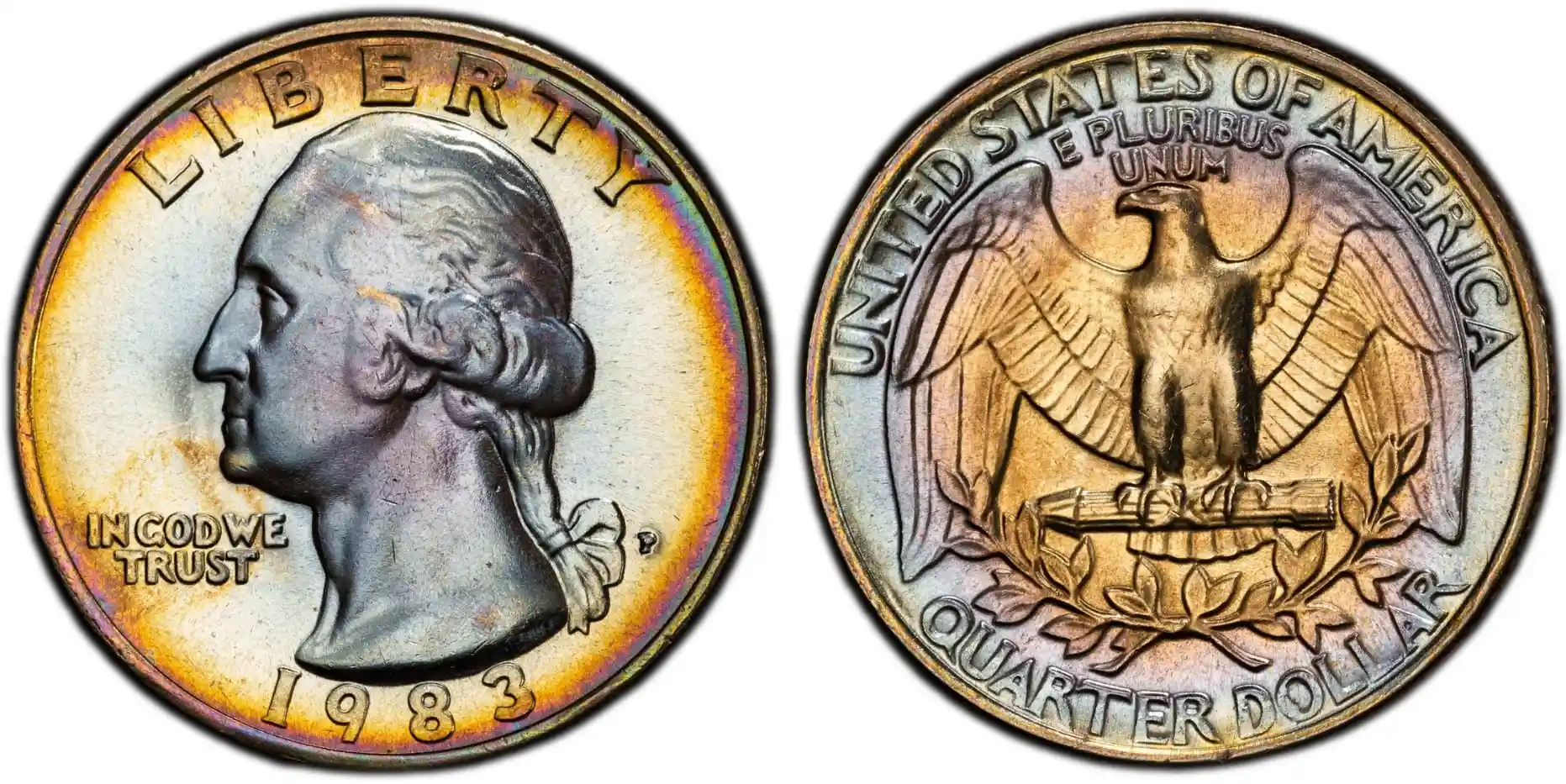
No official mint sets were sold in 1983. Usually, collectors bought these sets to get perfect coins. This year, the only source was regular circulation. People used these coins for daily buying. High wear destroyed the potential perfect coin supply. Low supply and high demand created high prices.
Main rarity causes:
- Pocket change wear
- No mint sets
- High daily use
Value Loss Risks From Bad Storage
Incorrect coin care leads to huge value losses. Strict rules exist for coin storage. Ignoring these rules results in financial damage.
Mechanical Cleaning
Sellers often try to clean coin surfaces. This action destroys the original mint luster. Cleaned coin value drops by 70% or more. Grading services reject these coins.
Chemical Damage
Household soap changes the metal color permanently. Ugly spots reduce coin appeal. Market price drops to face value.
Bad Packaging
Cheap plastic albums contain harmful chemical softeners. Acid damage turns coin surfaces green. Removing this green layer is impossible.
Safe storage materials:
- Hard plastic capsules
- Mylar coin flips
- Acid free paper
